


What to Expect on Your Surgery Day











Frequently Asked Questions
Common questions about what to expect during anesthesia.
What happens during anesthesia?
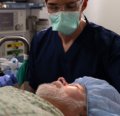
During anesthesiaThe use of medications to temporarily block pain, sensations, and awareness during procedures and surgery. There are many different types of anesthesia that a CRNA can provide. , you will be given medication to help you relax, fall asleep, and control your pain. An anesthesia professional, such as a Certified Registered Nurse Anesthetist (CRNA)Sometimes called a CRNA, nurse anesthesiologist, or nurse anesthetist, these are advanced practice registered nurses (APRN) who specialize in administering anesthesia for surgical, diagnostic, and therapeutic procedures. , will connect you to monitors and oxygen to make sure that you are responding well to the anesthesia. You may also hear CRNAs called nurse anesthesiologists or nurse anesthetists. Your anesthesia professional will stay with you throughout the procedure until you wake up in the recovery room. To learn more about what you can expect during your surgery and anesthesia, read this article Your Surgery Day.
Can you feel pain during anesthesia?
If you are receiving general anesthesiaA state of unconsciousness that is caused by medications administered by an anesthesia professional. This form of anesthesia is often used for procedures that would be too painful or uncomfortable to perform while the patient is only sedated or awake., you will not feel any pain during your surgery. During general anesthesia, you are unconscious and your brain cannot respond to pain signals. Other forms of anesthesia, such as sedationSometimes called conscious sedation or twilight anesthesia, this is the use of medications to help you feel relaxed and calm, and sometimes fall asleep during your medical procedure., regionalA type of anesthesia that blocks pain in a larger area of the body by numbing a group of nerves and involves techniques such as nerve blocks, epidurals, and spinals. , and localA type of anesthesia that numbs a smaller area of the body with numbing medication. , are also very effective at controlling your pain. As the anesthesia wears off, you may start to feel pain. Your anesthesia professional will work with your healthcare team to create a pain management plan just for you. Learn more about Pain Control During Surgery & Pain Management.
What happens when my child gets anesthesia?
When your child gets anesthesia, they will be given medication to help them relax and fall asleep. Your child will be connected to monitors to help make sure they are responding well to the anesthesia and the surgery. Your anesthesia professional will stay with your child throughout the procedure. Learn more about What to Expect during Your Child’s Surgery.
How can I manage pain during labor?
Pain can be managed during labor through regional anesthesiaA type of anesthesia that blocks pain in a larger area of the body by numbing a group of nerves and involves techniques such as nerve blocks, epidurals, and spinals. (epiduralAn injection of numbing medication into the epidural space that blocks pian signals from specific nerves. Epidurals can be given as a single injection, or with a catheter (tubing) that stays in place to continuously give medication. and spinalsSometimes called a “spinal block,” this is an injection of numbing medication into the spinal fluid that numbs the body from the waist down. ), pain medication, and non-medication options like breathing, relaxation, and movement techniques. To learn more about these topics, read these articles:
Can I wake up during surgery?
“Waking up” during surgery, sometimes called unintended awareness by anesthesia professionals, is extremely rare. During general anesthesia, you will be fully asleep due to the medication being administered by your anesthesia professional. Some patients may recall brief moments at the beginning or end of anesthesia, such as falling asleep, waking up, having a breathing tubeA flexible, plastic tube that is placed into the windpipe (trachea) to help keep the airway open and to support breathing. Breathing tubes are inserted during a process called intubation. removed, being moved or having a dressing applied. Your anesthesia professional will closely monitor you to keep you comfortable and appropriately sedated based on your procedure, medical history and pain management needs. To learn more about unintended awareness during anesthesia and other questions, read this article Anesthesia Fears and Myths.