Spinal and epidural anesthesia are safe and effective ways to provide pain relief during childbirth, surgery, or other procedures. This resource discusses the safety of spinal and epidural anesthesia. Download and print this resource from our experts in anesthesia care.
Local and Regional Anesthesia
Common and effective methods of pain control.
Reviewed on March 16, 2026 by Thomas Winn, DNP, CRNA, CNE

Article Summary
Local and regional anesthesia help block pain in a specific area of the body while allowing patients to remain awake or lightly sedated during a procedure. This article explains the different types of local and regional anesthesia, how they work, and the benefits they may offer for pain control and recovery. It also describes the safety measures anesthesia professionals use and what patients can expect before, during, and after receiving this type of anesthesia.

What is local anesthesia?
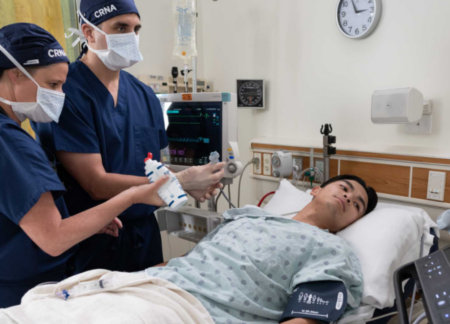
Local anesthesiaA type of anesthesia that numbs a smaller area of the body with numbing medication. numbs a small area of the body to prevent pain during a procedure. It works by blocking nerve signals in a targeted area, so pain signals do not reach your brain. Local anesthesia involves the use of medications (local anesthetics) that are injected by an anesthesiaThe use of medications to temporarily block pain, sensations, and awareness during procedures and surgery. There are many different types of anesthesia that a CRNA can provide. professional, such as a Certified Registered Nurse Anesthetist (CRNA)Sometimes called a CRNA, nurse anesthesiologist, or nurse anesthetist, these are advanced practice registered nurses (APRN) who specialize in administering anesthesia for surgical, diagnostic, and therapeutic procedures. , using a small needle, so you don’t feel pain in the treated area during the procedure. You may also hear CRNAs called nurse anesthesiologists or nurse anesthetists.
Sometimes, with local anesthesia, you are fully awake because the procedure is minor and doesn’t require you to fall asleep. You may have already experienced it during common procedures, such as:
- Dental work
- Removal of a mole or small skin growth
- Treatment of a cut that requires stitches
- Certain treatments for chronic pain
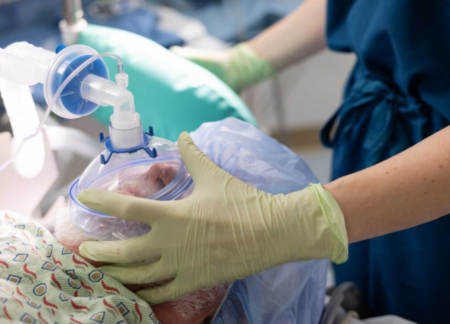
Other times, local anesthetics are given to reduce or eliminate pain after you wake up, when the surgeon still needs you to be asleep for a variety of reasons, such as moving, coughing, or changing position. In this case, either some sedationSometimes called conscious sedation or twilight anesthesia, this is the use of medications to help you feel relaxed and calm, and sometimes fall asleep during your medical procedure. will be given while you breathe on your own, or you will go fully asleep, and a breathing deviceDevices that are used to keep the airway open. Some of these devices are invasive, such as breathing tubes, and some are non-invasive, such as masks. Some non-invasive devices can be inserted into the mouth or nose to keep the airway open. will be placed to help you breathe.
How is local anesthesia administered?
Local anesthesia can be administered in several ways, depending on the type of procedure.
- Subcutaneous injection: The medication is injected just beneath the skin, where many nerve endings are located.
- Inhalation or topical application: For procedures involving the throat or airway, local anesthetics may be inhaled or applied directly to the affected area.
What is regional anesthesia?
Regional anesthesiaA type of anesthesia that blocks pain in a larger area of the body by numbing a group of nerves and involves techniques such as nerve blocks, epidurals, and spinals. blocks pain in a larger area of the body by numbing a group of nerves. It involves techniques such as peripheral nerve blocks (PNBs)A form of regional anesthesia where numbing medication (local anesthetic) is directly injected into the nerves to block signals. This form of anesthesia is used during and after procedures and surgery to control pain. , where the anesthesia professional will numb most of your arm or leg, or part of your abdomenSometimes called the “belly” or “core,” this is the part of the body below the chest and above the pelvis. , compared to spinal Sometimes called a “spinal block,” this is an injection of numbing medication into the spinal fluid that numbs the body from the waist down. and epiduralAn injection of numbing medication into the epidural space that blocks pian signals from specific nerves. Epidurals can be given as a single injection, or with a catheter (tubing) that stays in place to continuously give medication. anesthesia, where sensation is blocked from the abdomen down to your feet.
How is regional anesthesia administered?
Regional anesthesia can be administered in several ways, depending on the type of procedure.
Spinal and epidural anesthesia numb the lower half of the body. Local anesthetic medications are placed in the spinal canal where the nerves arise for the spinal cordA tube of nervous tissue that runs from the base of the brain down to the end of the spine. The spinal cord is responsible for sending nerve signals from the brain to the rest of the body. (spinal) and in the space directly outside of the spinal canal (epidural) where nerves go towards the rest of the body, blocking sensation from where the block was placed downward all the way to the feet.
Peripheral nerve blocks (PNBs) involve placing local anesthetic near larger nerves that supply sensation to a specific area, such as from the elbow to the hand, the entire arm, or portions of the leg or abdomen. This numbs that area to pain and sometimes limits movement. For many surgeries, this technique is combined with other methods to provide effective, targeted pain control.
What are the most common types of local and regional anesthetics?
The most common types of local and regional anesthetics used are:
- Bupivacaine (Marcaine®)
- Lidocaine
- Liposomal bupivacaine (Exparel®)
- Ropivacaine (Naropin®)
These drugs have various release times and durations. For minor procedures, they can provide quick pain relief. For more invasiveSurgeries and procedures that enter the body. This is usually by cutting or puncturing the skin, but this can also include inserting instruments into the body. procedures such as orthopedic surgeries, cesarean sectionSometimes called a C-Section, this is a surgery where incisions (cuts) are made first into the abdomen, and then the layers of the uterus. From there, the baby and the umbilical cord and placenta are removed. , herniaWhen an organ, like the intestines, or fat squeezes through a weak spot in the muscle. Often occurs in the abdomen or the groin. repair, etc., a slow-release local anesthetic such as Exparel® can help control pain for up to 72 hours or more.
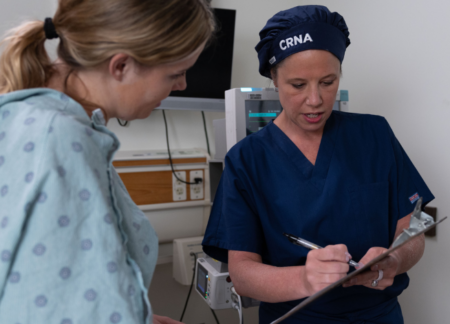
Your anesthesia professional will choose the most appropriate medication based on your procedure, medical history, and pain management needs. Rest assured that CRNAs are committed to ensuring you feel informed, comfortable, and confident at every step of your care and will take the time to talk through your procedure, how they will administer the anesthesia and what to expect.
What are some important things to remember?
- Anesthesia today is very safe due to advances in medication, monitoring technology, and specialized training by anesthesia professionals such as CRNAs.
- Anesthesia care is tailored to each patient.
- Don’t be shy. It’s okay to ask questions prior to the procedure to fully understand your anesthesia care.
- If you’ve previously experienced side effects of anesthesia, such as headache or nausea, tell your anesthesia professional so they can provide you with medication to help counteract these side effects.
- If you have questions about your anesthesia plan, your anesthesia professional can explain your options and help you understand what to expect before, during and after your procedure.
Disclaimer: The information on this page is for general educational and informational purposes only and does not constitute medical advice or a recommendation for any specific anesthesia technique, drug, or treatment. Users should consult a qualified medical professional before making any decisions regarding anesthesia care. For complete terms, see our Terms of Use.





Was this helpful?