Anesthesia Safety during Labor and Delivery

Is anesthesia safe to use during labor and delivery?
Yes, anesthesiaThe use of medications to temporarily block pain, sensations, and awareness during procedures and surgery. There are many different types of anesthesia that a CRNA can provide. methods used to control pain during labor and deliveryThe process of childbirth where the body prepares for birth (labor) through uterine contractions and cervical dilation (opening) and the baby is born (delivery). , such as epiduralsAn injection of numbing medication into the epidural space that blocks pian signals from specific nerves. Epidurals can be given as a single injection, or with a catheter (tubing) that stays in place to continuously give medication. and spinalsSometimes called a “spinal block,” this is an injection of numbing medication into the spinal fluid that numbs the body from the waist down. , are safe for you and your baby. Very serious complications, such as infection, nerve damage, and bleeding are rare. To learn more about the benefits and risks of these methods, learn more about your Anesthesia Options during Labor.
How will my anesthesia professional keep me safe?
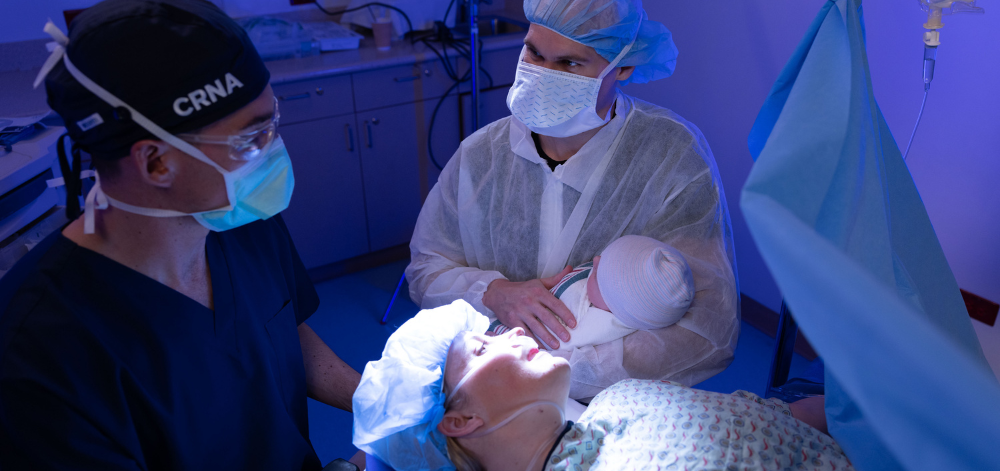
Your anesthesia professional, such as a Certified Registered Nurse Anesthetist (CRNA)Sometimes called a CRNA, nurse anesthesiologist, or nurse anesthetist, these are advanced practice registered nurses (APRN) who specialize in administering anesthesia for surgical, diagnostic, and therapeutic procedures. , will meet with you to discuss your medical history and pregnancy. You may also hear CRNAs called nurse anesthesiologists or nurse anesthetists. They will review how your labor is progressing and discuss your options for anesthesia and pain control during labor. They will create a personalized anesthesia plan based on your health, your preferences, and what’s best for you and your baby.
During labor and delivery, your anesthesia professional will work with your care team to:
- Monitor your heart rate, blood pressure, oxygen levels, and breathing
- Check on your baby’s condition regularly
- Adjust your pain medication as your labor progresses
- Watch for any changes in how you’re feeling
- Be ready to help if any problems come up
How can I keep my baby and I safe during labor and delivery?
You play an important role in the safety of your labor and delivery. Here are things you can do to help keep you and your baby safe during this time:
- Ask questions: Don’t be shy about asking your anesthesia professional anything you want to know before or during labor.
- Share how you’re feeling: During the placement and assessment of your epidural, your anesthesia professional will ask you if you feel numbness in unexpected places (such as the mouth or tongue), notice a metallic taste in your mouth, or if you are experiencing dizziness, ringing in your ears, or a change in breathing. While rare, these can be signs of serious complications.
- Communicate throughout labor: Keep talking with your anesthesia professional about pain control as your labor progresses. Your feelings and experiences matter.
- For example, when you have an epidural, you will be given a button to press for additional anesthetic to help with pain. This means that you can give yourself additional pain medication without waiting for someone to give it to you. If you feel that your pain is unbearable and isn’t improving, talk with your anesthesia professional. They can adjust your medication to help keep you as comfortable as possible throughout your labor.
- Prepare ahead of time: Take prenatal classes and learn as much as you can about labor and delivery before it happens.
- Stay calm: If an emergency happens, staying as calm as possible and following your care team’s instructions is the best thing you can do for yourself and your baby.
- Involve your support person: Your support person can act as your advocate and help communicate with your healthcare team.
Key Safety Reminders
- Every patient is different. Your anesthesia plan will be tailored just for you.
- Your anesthesia professional is trained and experienced in keeping you and your baby safe.
- Communication is key. Tell your healthcare team how you’re feeling at every step.
- Epidurals and spinals are great options to help keep you safe and comfortable during labor and delivery. Learn about What to Expect during Vaginal Birth and What to Expect during a C-Section.
Disclaimer: The information on this page is for general educational and informational purposes only and does not constitute medical advice or a recommendation for any specific anesthesia technique, drug, or treatment. Users should consult a qualified medical professional before making any decisions regarding anesthesia care. For complete terms, see our Terms of Use.







Was this helpful?